| HS Code | 239995 |
| Density | 0.954 g/cm³ |
| Melt Flow Rate | 0.9 g/10 min (190°C/2.16 kg) |
| Tensile Yield Strength | 24 MPa |
| Elongation At Break | 500% |
| Flexural Modulus | 1000 MPa |
| Notched Izod Impact Strength | 10 kJ/m² |
| Vicat Softening Point | 124 °C |
| Melting Point | 130 °C |
| Shore D Hardness | 60 |
| Environmental Stress Crack Resistance | >1000 h |
| Brittle Temperature | -70 °C |
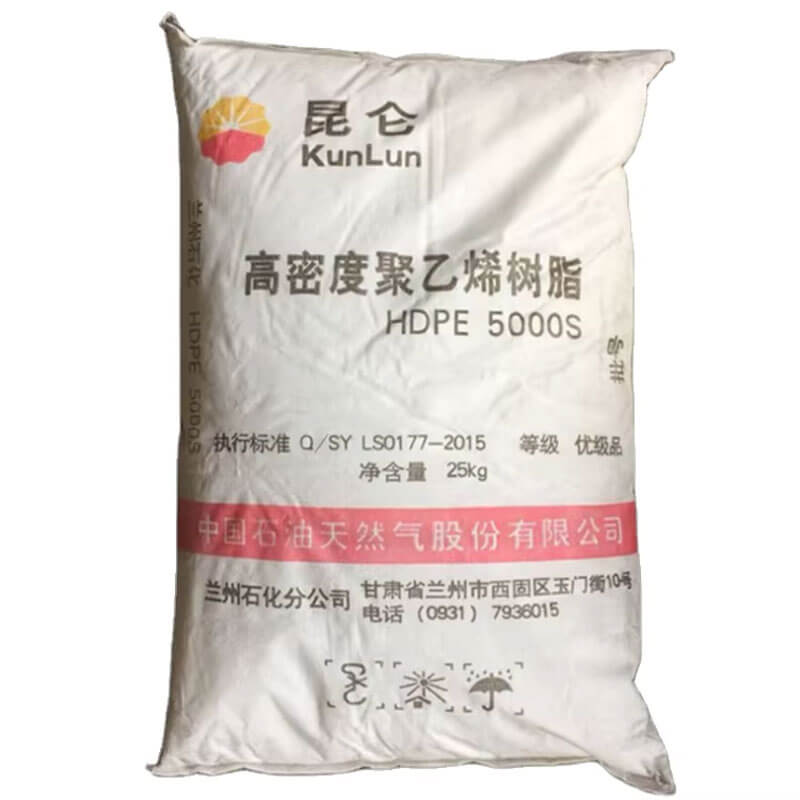
As an accredited High‑Density Polyethylene 5000S factory, we enforce strict quality protocols—every batch undergoes rigorous testing to ensure consistent efficacy and safety standards.
| Packing | High-Density Polyethylene 5000S is supplied in 25 kg woven polypropylene bags, lined with moisture-proof film for safe handling and storage. |
| Container Loading (20′ FCL) | 20′ FCL: HDPE 5000S granules in 25 kg bags, palletized and secured, loading about 20–25 metric tons per container. |
| Shipping | High-Density Polyethylene 5000S ships as a non-hazardous plastic resin in woven bags, jumbo bags, or bulk containers. Protect from moisture, extreme heat, and contamination during transit. Store in a cool, dry, ventilated area, away from oxidizers and direct sunlight. Avoid extended storage to maintain material quality. |
| Storage | Store High-Density Polyethylene 5000S in a cool, dry, well-ventilated area, away from direct sunlight, heat, and ignition sources. Keep containers tightly sealed to prevent moisture contamination and avoid contact with strong oxidizers. Maintain moderate temperatures to preserve material properties. Use proper handling and personal protective equipment to minimize dust accumulation and ensure workplace safety. |
| Shelf Life | High-Density Polyethylene 5000S has an indefinite shelf life when stored in dry, cool conditions away from direct sunlight and contamination. |
Extrusion blow moulding of HDPE 5000S into tight-head and open-top containers for liquid chemicals is executed on accumulator-head machines with parison programming. The high-molecular-weight melt maintains a stable parison at die gaps between 2.0 mm and 4.0 mm, with barrel temperatures profiled from 170 °C in the feed zone to 210 °C in the metering zone and die-head temperatures held at 195–205 °C. For a 20 L jerrycan, the parison mass typically falls between 700 g and 900 g, and the accumulator plunger speed is programmed to deliver a 1.5:1 to 2.0:1 wall-thickness ratio between the shoulder and the sidewall. Mould temperatures of 10–25 °C and blow-air pressure in the 0.6–0.8 MPa range produce demoulding cycles of 70–120 s. The process is constrained by the onset of melt fracture at excessive shear rates; die-head shear rates below 2000 s⁻¹ are normally maintained. Pellets are not hygroscopic, so conditioning is unnecessary unless surface condensation forms during cold-to-warm transfer; in that case a hopper dryer at 70 °C for 1 h prevents surface splay. The resulting tight-head containers are used for light liquid hydrocarbons, water-emulsifiable cutting fluids, agricultural adjuvants, and detergents. Qualification of such packaging for regulated dangerous goods follows the design-type test programme of the UN Model Regulations Chapter 6.1; plastics jerrycans are subjected to drop tests at -18 °C after 24 h conditioning, with drop heights of 1.8 m, 1.2 m, and 0.8 m for packing groups I, II, and III respectively. Hydraulic internal pressure tests are run at 100 kPa for at least 30 min for liquid packaging in packing groups II and III. When food contact is required, the raw grade must meet EU Regulation 10/2011 with overall migration below 10 mg/dm², and U.S. FDA 21 CFR 177.1520(c)(2.1) for high-density polyethylene homopolymer. The same resin lot must not be released for both food and oxidizer packaging unless documented compatibility data exist; exposure to concentrated nitric acid, sulfuric acid above 60%, or strong hypochlorite solutions above 50 °C is outside the established service envelope.
| Conversion route | Standard | Test method | Typical acceptance threshold |
|---|---|---|---|
| UN-certified jerrycan | UN 6.1.5.3 | Drop test at -18 °C, 1.2 m | No rupture or leak |
| Food-contact monolayer | EU 10/2011 | Overall migration, 40 °C/10 days, simulant D1 | <10 mg/dm² |
| Outdoor monofilament | ASTM D5208 | UV exposure cycle | Retained tensile strength defined by end-use specification |
Six-layer coextrusion blow moulding positions HDPE 5000S as the structural layer in barrier containers for edible oils, sauces, and diluted agrochemicals. The layer distribution commonly places an outer HDPE cap layer at 30–35% of total wall thickness, a regrind layer at 30–40%, a tie layer at 2–3%, an EVOH barrier core at 3–5%, and an inner HDPE food-contact layer at 20–30%. The HDPE streams are processed at 200–220 °C, while the EVOH stream is held at 190–210 °C to avoid gel formation above 230 °C. Adhesion of the EVOH layer is controlled by the maleic-anhydride-grafted tie resin; peel strength measured by ASTM F88/F88M-21 must remain above 4 N/15 mm after 24 h immersion in the target liquid. Oxygen permeation through the finished container at 23 °C and 50% RH is typically one to two orders of magnitude lower than monolayer HDPE when the EVOH layer remains below its glass transition hydration threshold. The main processing limit is delamination when the die temperature exceeds 230 °C or when the regrind layer contains more than 10% oxidized gel, which locally reduces tie-layer wetting. Terminal products are multilayer bottles from 250 mL to 5 L for ketchup, mayonnaise, liquid egg, and plant-protection formulations; food-contact qualification follows EU Regulation 10/2011, Annexes I and II, and FDA 21 CFR 177.1520(c)(2.1) for the HDPE plies, while the EVOH and tie plies are independently cleared under their respective food-contact listings.
On high-stalk HDPE blown-film lines with upward air ring cooling, HDPE 5000S is extruded through a die gap of 0.8–1.2 mm and inflated to a blow-up ratio between 3:1 and 5:1. Melt temperatures at the die lip are set from 200 °C to 230 °C to stabilise the bubble without excessive oxidation. The high-stalk configuration raises the frost-line height to 8–12 times the die diameter, which promotes machine-direction orientation and yields a balanced film. Draw-down speed is adjusted to produce gauge between 15 μm and 60 μm; on production lines with automatic air gauges, thickness variation is maintained within ±5%. Tensile properties of the blown film are measured in the machine and transverse directions according to ASTM D882-18, with typical machine-direction elongation at break exceeding 600%; dart impact is assessed by ASTM D1709 Method A. The resulting films are used for T-shirt bags, bin liners, courier envelopes, and industrial liners where rigidity and high yield strength are required. Food-contact use of intact monolayer film is permitted under FDA 21 CFR 177.1520(c)(2.1) when the film is produced without post-consumer recycled content; where recycled content is introduced, compliance must be established under the applicable mechanical recycling positive list. The primary limitation is tear initiation resistance; relative to LLDPE-rich blends, HDPE 5000S monolayer film exhibits lower Elmendorf tear in thin gauges and should not be selected for sharp-edged or high-puncture packaging without a LLDPE blend partner.
Automotive washer-fluid reservoirs and coolant overflow bottles blow-moulded from HDPE 5000S require consistent low-temperature impact and resistance to continuous immersion in 50% ethylene glycol/water at underhood temperatures. The parison diameter is governed by die swell, which for this grade is typically 1.5:1 to 2.0:1 at annular shear rates below 2000 s⁻¹. Parison sag is controlled by the melt strength; on accumulator-head machines with a 24:1 to 30:1 L/D extruder and a barrier screw with 3:1 compression ratio, sag is held below 10% of initial length at melt temperatures of 200–215 °C. Programmed parison thickness is set to compensate for draw-down in the upper pinch-off area and to thicken the pinch seam where cold impact failures initiate. Mould cooling at 12–20 °C and blow pressure of 0.7–1.0 MPa are used. Components are evaluated for impact toughness by double-notch ISO 8256 or notched Izod ISO 180/A at -30 °C; acceptance limits are vehicle maker-specific and are not universally published. Immersion resistance is tested in 50% ethylene glycol at 90 °C for 1000 h, with retention of tensile elongation of at least 50% relative to unaged specimens commonly specified. The shaped reservoirs feed underhood fluid management assemblies and are welded using hot-plate, infrared, or vibration welding; hot-plate welding is performed at 210–230 °C plate temperature and 0.15–0.30 MPa joining pressure to avoid squeeze-out and reduce weld flash. This application should not be extended to fuel tanks without fluorination or sulfonation treatment because the hydrocarbon permeation of untreated HDPE is above the limits set by CARB and EPA evaporative emission regulations under 40 CFR Part 86.
Drawn monofilament extrusion from HDPE 5000S is performed on single-screw extruders with a 30:1 L/D ratio and water-cooled feed throat to prevent bridging. Melt is discharged through a spinneret with hole diameters from 0.8 mm to 2.0 mm into a water quench bath maintained at 30–45 °C. The quenched filaments are drawn in a two-stage hot-air oven at 105–125 °C to a draw ratio of 7:1 to 10:1, followed by an annealing zone with 5–10% relaxation to control residual shrinkage. Denier per filament is set by hole diameter and draw ratio; typical industrial monofil runs range from 0.15 mm to 1.2 mm final diameter. Tensile strength of oriented monofilament is evaluated by ASTM D2256-21; knot strength and loop tenacity are more relevant for netting and are evaluated under ISO 2307:2019. The drawn filaments are fabricated into fishing netting, aquaculture cage netting, sports netting, rope yarn, and woven geotextile reinforcement. For outdoor exposure, UV stabilization is compulsory; carbon black at 2.0–2.5% by mass is compounded before extrusion to provide accelerated weathering resistance according to ASTM D5208 exposure conditions. The grade is not qualified for load-bearing personal protective equipment or fall-arrest systems.
HDPE 5000S sheet is extruded through a slit die onto a vertical three-roll polishing stack; melt temperature at the die is held at 190–215 °C, and roll temperatures are set to 60–90 °C for gloss and stress relief. Sheet thickness commonly ranges from 2 mm to 8 mm, with thickness tolerance controlled to ±3% by automated die bolts. The extruded sheet is thermoformed into returnable dunnage trays, material-handling containers, and interior trim panels using plug-assisted vacuum forming. For a 4 mm sheet, preheating to 160–180 °C surface temperature is used, with a forming pressure of 0.05–0.10 MPa and plug speed below 500 mm/s to avoid chilling. The deep-draw capability of HDPE 5000S is limited relative to PP; draw ratios above 1.5:1 on vertical sidewalls may require a coextruded low-melt-strength skin or increased forming temperature. Dimensional stability after forming is assessed by shrinkage at 80 °C for 2 h, with typical retained sheet dimensions within 1%. End-use products include collapsible heavy-duty trays, interlayer dunnage, automotive battery trays, and reusable logistics boxes. Where the sheet is used in contact with food, the same EU 10/2011 and FDA 21 CFR 177.1520(c)(2.1) migration conditions apply; for industrial dunnage, RoHS 2011/65/EU heavy-metal limits are relevant only if the article is placed on the EU market as electronic equipment housing, not for general packaging.
For corrugated land-drainage pipe and fibre-optic cable duct, HDPE 5000S is processed on grooved-barrel single-screw extruders with vacuum calibration sleeves and spray cooling. The pipe is extruded at melt temperatures of 190–220 °C, with a die-to-pipe diameter ratio of 1.5:1 to 2.5:1 depending on draw-down. Vacuum calibration is set to 0.03–0.07 MPa negative pressure to hold the external diameter within the tolerance class defined by ISO 4427-2:2019 for solid-wall polyethylene pipe dimensions. HDPE 5000S is not automatically classified as PE 100 or PE 80 under ISO 9080:2012 and ISO 12162:2009; pressure service requires lot-specific hydrostatic design basis confirmation. The primary use is non-pressure corrugated drainage, where wall sections are 0.8–2.5 mm thick and annular corrugation is formed by a moving mould block system. The smooth inner wall is extruded through a mandrel at 0.6–1.2 m/min and corrugated outside layers are locked at the same speed. End products include agricultural drainage pipes, highway edge drains, and communication innerduct. Outdoor installation requires carbon black dispersion of 2.0–2.5% by mass; weathering resistance is assessed by ISO 16871 or by the relevant national road authority specification. The operational limit is the low melt flow nature of the grade, which increases screw torque and encourages melt-temperature rise in high-output pipe lines; barrel cooling is required above 80 rpm screw speed on 65 mm and larger extruders.
Competitive High‑Density Polyethylene 5000S prices that fit your budget—flexible terms and customized quotes for every order.
For samples, pricing, or more information, please contact us at +8618136850665 or mail to sales4@ascent-chem.com.
We will respond to you as soon as possible.
Tel: +8618136850665
Email: sales4@ascent-chem.com
Flexible payment, competitive price, premium service - Inquire now!
High-Density Polyethylene 5000S is a high-molecular-weight, broad-molecular-weight-distribution extrusion-grade high-density polyethylene supplied as natural or black-compounded pellet. The product designation 5000S is a commercial trade-grade identifier rather than a resin-chemistry descriptor, and certificates of analysis from different producers may therefore show controlled variation around the same nominal property envelope. Industrial converters use the grade for thick-walled open-top drums, closed-head industrial containers, technical sheet, and heavy-service storage where long parison hang time and high environmental stress-crack resistance are required. The grade is not designed around injection-moulding flow behaviour; its high-molecular-weight architecture is maintained to increase melt strength during extrusion blow-moulding and thick-sheet forming.
Published supplier datasheets customarily report the property envelope below for 5000S. These values are representative for natural or compounded HDPE feedstock and should not be read as guarantee limits unless stated by the certificate of analysis.
| Property | Test method | Typical value |
|---|---|---|
| Density | ISO 1183-1 | 0.953–0.957 g/cm³ |
| High-load melt flow rate | ISO 1133-1:2022, 190°C, 21.6 kg | 0.30–0.80 g/10 min |
| Tensile yield stress | ISO 527-2/1A | 24–28 MPa |
| Tensile elongation at break | ISO 527-2/1A | >600% |
| Flexural modulus | ISO 178 | 950–1200 MPa |
| Notched Izod impact at 23°C | ISO 180/A | No break |
| Vicat softening temperature | ISO 306/A50 | 118–125°C |
| Environmental stress-crack resistance, F50, 10% Igepal at 50°C | ASTM D1693-B | >1000 h |
Because the high-load melt flow rate is specified below 1.0 g/10 min, the standard melt flow test under 2.16 kg is not used for production control; the 21.6 kg high-load condition is used to distinguish supply lots. A capillary apparent viscosity at 190°C and 100 s⁻¹ in the range 1.5–3.5 kPa·s is frequently reported for this melt architecture; however, certificates of analysis should control this parameter lot-by-lot. Density outside the 0.953–0.957 g/cm³ window indicates comonomer or crystallinity variation and may shift drop-impact and environmental stress-crack resistance performance.
On accumulator-head shuttle machines configured with 80–120 mm barrier screws and L/D 30:1, 5000S is processed with barrel zones from 190°C to 225°C and die-head temperatures from 205°C to 230°C. Melt temperatures above 250°C promote thermo-oxidative chain scission in the presence of oxygen, causing viscosity loss, parison sag instability, and surface flow marks. Temperature variation greater than ±5°C around the accumulator head produces parison thickness asymmetry that is amplified in the chime and pinch-off zones.
Typical extruder output for a 90 mm grooved-barrel extruder is 250–400 kg/h, with specific energy input of 0.18–0.25 kWh/kg and melt pressure upstream of the screen pack from 25–40 MPa. A melt pump with inlet pressure of 5–15 MPa is used to isolate accumulator recharge from screw speed. Screen packs of 20/40/60 mesh remove die-plugging contaminants from post-industrial reclaim, but finer packs increase melt temperature and shear heating. Accumulator shot sizes of 5–15 kg are typical for 100–200 L containers.
Parison programming with 20–100 point axial thickness control is required for chime-heavy drums. The die gap is set to 2–4 mm, and blow air pressure of 0.7–1.0 MPa is used after pre-blow at 0.1–0.3 MPa. The die swell ratio of this class is generally above 1.4; tooling offsets must compensate for both swell and parison pre-blow inflation. Regrind addition is limited to 10–20 wt% in heavy-wall drums when the reclaim contains no silicone mold-release residues or hydrocarbon contamination. Higher regrind fractions degrade melt strength and widen wall-thickness variation beyond ±10%.
When high-density polyethylene 5000S is compared with bimodal pipe resins and fractional-melt-index sheet grades, the separation is dominated by molecular architecture rather than density. Bimodal PE100 resins are designed for slow-crack growth resistance under hoop stress; their high-molecular-weight fraction carries comonomer to generate tie molecules, while the lower-molecular-weight fraction preserves processability. 5000S is optimized for blow-moulded wall thickness control, not for 50-year pressure-pipe hydrostatic design stress. Substitution in buried pressure piping without full qualification to ISO 9080 and ISO 12162 is outside the published property envelope. Published data for 5000S in pressurized pipe service are limited.
Compared with fractional-MI HDPE sheet grades, 5000S provides higher melt strength and deeper thermoforming draw capability, but usually lower surface gloss and lower flexural modulus than chain-stiff rigid sheet grades. Compared with injection-moulding HDPE, the high-molecular-weight distribution of 5000S increases melt residence time, raises feed pressure, and prolongs cooling time; therefore it is not an injection-moulding grade. In sheet extrusion, the grade is run with polished roll temperatures of 70–90°C and take-off specific output of 3–5 kg/h per mm of die width; these settings fall within standard high-molecular-weight HDPE practice, but lot-specific adjustment is required.
Regulatory status for 5000S is additive-package-dependent. The following framework is used in specification review but does not replace grade-specific certification from the resin supplier.
| Standard or regulation | Relevant boundary condition |
|---|---|
| EU Regulation (EC) No 1907/2006 (REACH) | Polymer itself is exempt from registration; monomers and additives must be registered or authorised. |
| RoHS Directive 2011/65/EU | Natural grades customarily demonstrate Pb, Hg, Cr⁶⁺ below 0.1 wt% and Cd below 0.01 wt%. |
| FDA 21 CFR 177.1520 | Olefin polymers for food contact may be used subject to extractable fraction and end-use temperature limits. |
| EU 10/2011 | Overall migration limit is 10 mg/dm² for plastic food-contact articles, or 60 mg/kg for infant-food configurations. |
| ASTM D4976-12a | Polyethylene specification cell limits for molding and extrusion materials; grade must be assigned to flow-rate and density cells. |
Operational boundaries include continuous contact with strong oxidants or aromatic solvents above 40°C; HDPE swells and loses strength in xylenes, toluene, and chlorinated solvents. For chlorinated-water service above 50°C, slow crack growth accelerates in notched sections; a higher environmental stress-crack resistance grade with a narrower molecular weight distribution may be required. Outdoor unpigmented articles require a UV stabiliser or carbon black loading of 2–3 wt%; without photo-stabilisation, tropical exposure can embrittle surface layers within months.
When 5000S is specified for a 200 L open-top drum, acceptance testing normally includes a drop impact test at −18°C per ASTM D2463-15, filled stacking at 40°C for 28 days, and environmental stress-crack resistance evaluation on the moulded wall rather than on compression-moulded plaques. Wall-thickness distribution should be mapped at the lip, chime, sidewall midpoint and corner radius with ultrasonic thickness gauges; sidewall variation greater than ±10% may produce buckling under stacked load. Moulds must be configured to accommodate die swell and to avoid sharp pinch-off weld lines that reduce drop-impact resistance.