| HS Code | 374497 |
| Density | 0.917-0.930 g/cm³ |
| Melting Point | 105-115 °C |
| Tensile Strength | 8-20 MPa |
| Elongation At Break | 300-600% |
| Flexural Modulus | 200-400 MPa |
| Thermal Conductivity | 0.32-0.35 W/(m·K) |
| Water Absorption | 0.005-0.015% over 24 hours |
| Dielectric Constant | 2.2-2.4 at 1 MHz |
| Chemical Resistance | Resistant to most acids, bases, and alcohols; poor resistance to hydrocarbons and oxidizing agents |
| Uv Resistance | Poor; susceptible to degradation unless stabilized with UV additives |
| Transparency | Translucent to opaque depending on thickness |
| Processability | Excellent; suitable for extrusion, injection molding, and blow molding |
As an accredited Low‑Density Polyethylene LDPE factory, we enforce strict quality protocols—every batch undergoes rigorous testing to ensure consistent efficacy and safety standards.
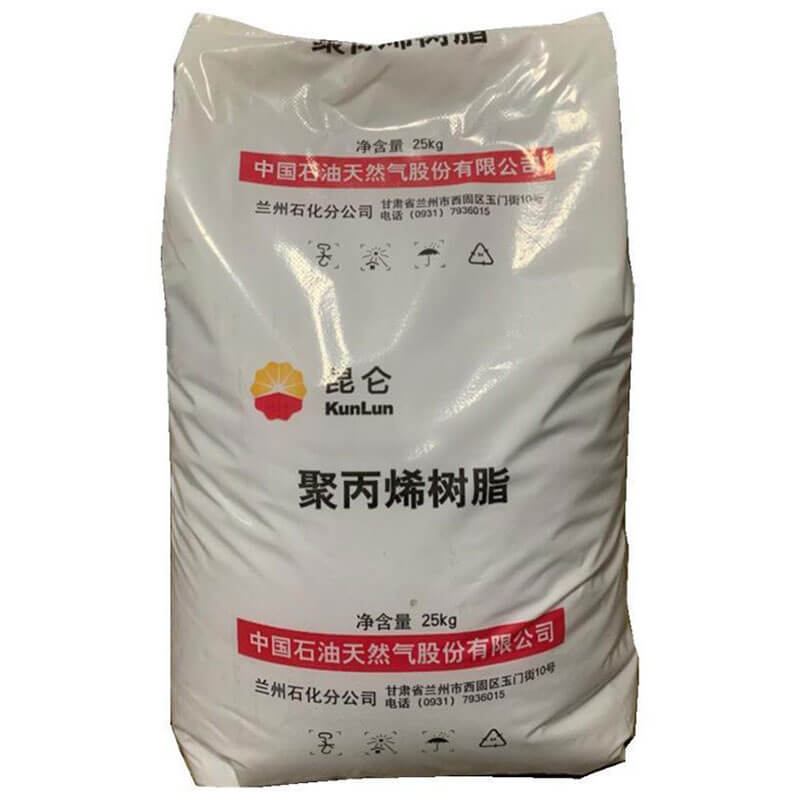
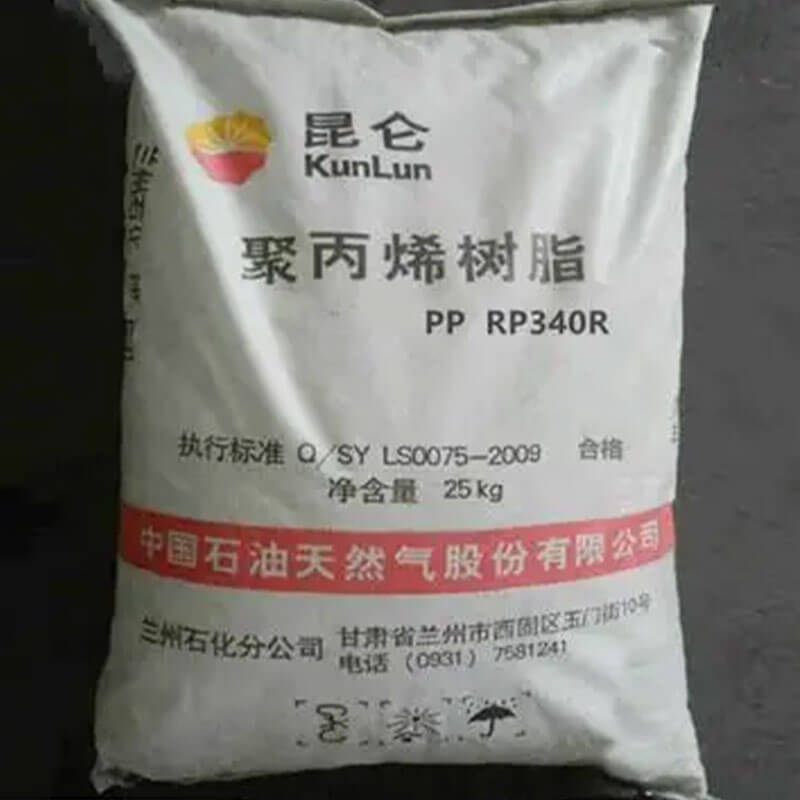
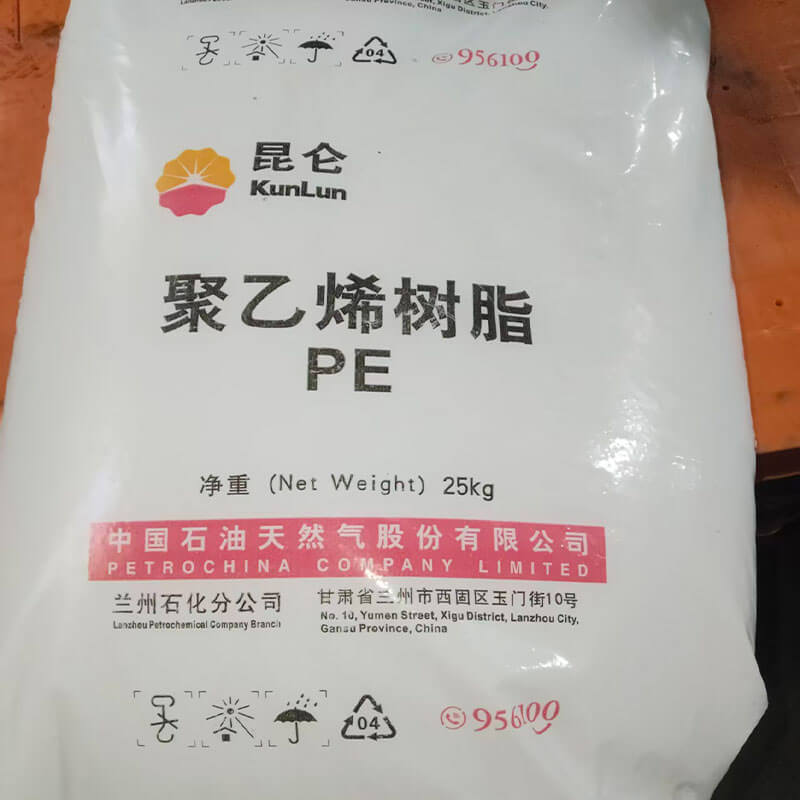
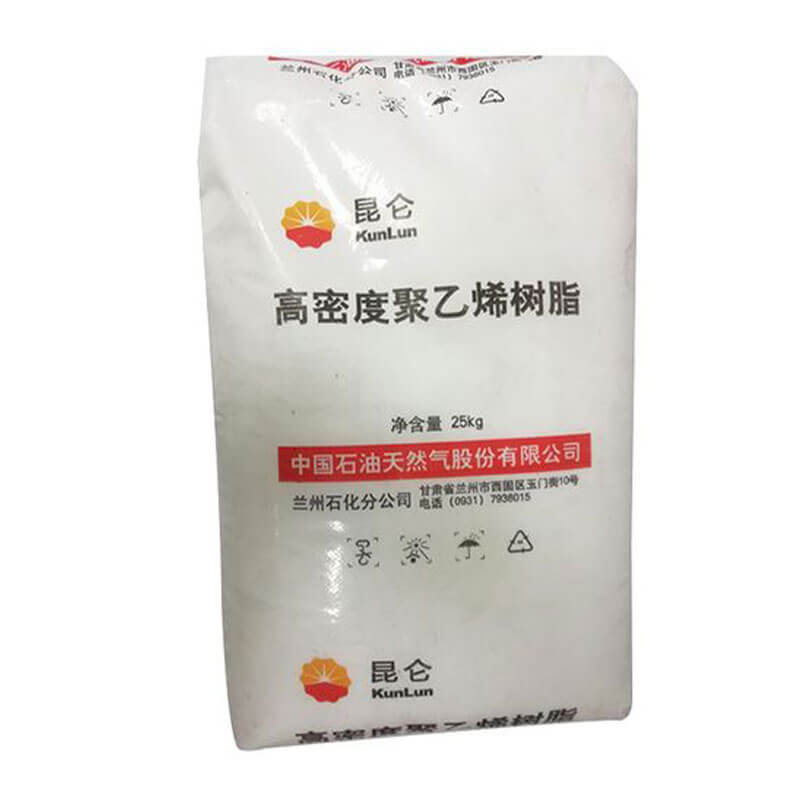
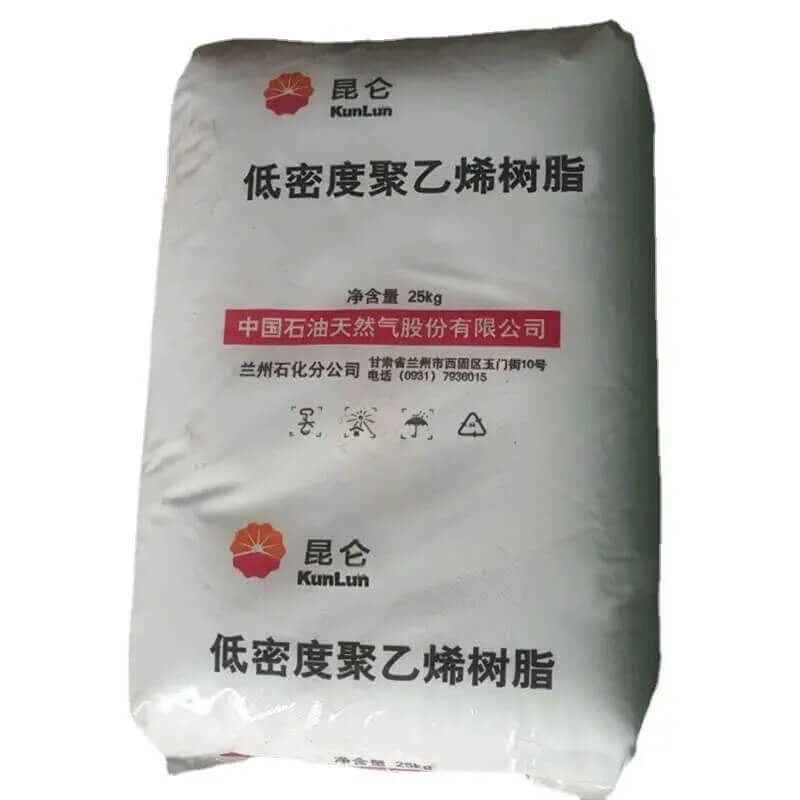
| Packing | Low-density polyethylene (LDPE) is supplied as pellets in 25 kg woven polypropylene bags with a polyethylene liner, ensuring safe handling and storage. |
| Container Loading (20′ FCL) | LDPE resin pellets packed in 25kg bags or FIBCs on pallets, loaded into a 20ft FCL, maximizing volume while respecting payload limits. |
| Shipping | LDPE is shipped as pellets or granules in woven bags, bulk bags, or hopper cars. It is non-hazardous but requires clean, dry conditions to prevent contamination. Avoid high temperatures and static buildup; use closed conveyors or pneumatic transfer to ensure product integrity and safe handling. |
| Storage | Store LDPE in a cool, dry, well-ventilated area, away from direct sunlight, UV sources, and heat. Keep containers tightly sealed and protect from physical damage. Avoid proximity to open flames, sparks, strong oxidizers, and peroxides. Maintain moderate humidity and temperature to prevent degradation, embrittlement, or static accumulation. Rotate stock to avoid prolonged storage. |
| Shelf Life | Low-density polyethylene (LDPE) has a shelf life of several years when stored away from UV light, heat, and oxygen. |
Blown film lines processing LDPE for heavy-duty sacks and industrial liners operate within a narrow bubble stability window defined by melt strength, die pressure, and the temperature gradient from the die lip to the frostline. Grades selected for this sector typically exhibit a melt index of 0.5–2.0 g/10 min when measured per ISO 1133-1:2022 at 190 °C/2.16 kg and a density of 0.918–0.925 g/cm³ per ISO 1183-1:2019. On a 45 mm grooved-feed extruder with an L/D ratio of 30:1 and a dual-lip air ring, barrel temperatures are profiled from 150 °C in the feed zone to 180 °C at the die, while the die temperature is maintained at 165–175 °C to stabilise the bubble. Blow-up ratios between 2.2:1 and 3.0:1 are standard for sacks requiring balanced machine-direction and transverse-direction tensile properties; die gap settings of 1.2–2.0 mm are used to control orientation. Frostline height is set between 400 mm and 800 mm depending on cooling demand. The long-chain branching in autoclave LDPE provides higher melt tension than linear low-density polyethylene at equivalent melt index, allowing the bubble to withstand high-speed haul-off without draw resonance. Surface treatment and additive let-down are specified from the converter end. The addition of 0.5–1.5 wt% slip agent and 0.2–0.8 wt% antiblock concentrate prevents blocking after 4–8 weeks of storage without dropping dart impact below the converter specification. Dart impact is measured per ASTM D1709-22 Method A or ISO 7765-1:2004. Surface tension after corona treatment reaches 38–42 mN/m for flexographic or rotogravure printing, measured per ISO 8296:2003. Film line output is limited by bubble cooling capacity rather than screw speed; a 45 mm line running 120 kg/h at 2.5:1 blow-up ratio and 50–70 µm gauge is common, but output varies with die diameter and air ring design. Published data for specific production-scale configurations is limited because converter conditions are proprietary.
In liquid-packaging board converting, LDPE is applied as a heat-seal layer or barrier tie layer using autoclave grades with melt indices of 4.0–8.0 g/10 min and densities of 0.915–0.923 g/cm³. Melt temperature at the slot die is maintained between 290 °C and 320 °C; this elevated temperature promotes chemical adhesion to aluminium foil and improves wettability on paperboard surfaces. Neck-in is the limiting variable in this process, with typical neck-in values of 25–60 mm per side on a 600 mm die depending on die gap, air gap, and melt temperature. Coating weight is controlled via substrate speed and extruder throughput; liquid-packaging structures commonly use 12–25 g/m² for barrier layers and 8–15 g/m² for heat-seal layers. Adhesion is measured on 15 mm strips per ASTM D1876-08 or ISO 8510-2:2006, with converter specifications often requiring fibre tear on paper and a minimum peel force of 2.0–6.0 N/15 mm on foil-based structures. Ozone treatment of the melt curtain at 0.06–0.12 kW/m² increases oxygen-containing functional groups and improves adhesion on paper. The chill roll finish controls gloss and back-side roughness; matte finishes with Ra 6–10 µm are used for downstream lamination, while gloss finishes with Ra <2 µm are required for high-print-quality surfaces.
| Converted substrate | Melt index band | Coating weight |
| Liquid-packaging board barrier tie | 4–8 g/10 min | 12–25 g/m² |
| Flexible paper food packaging heat-seal | 4–8 g/10 min | 8–18 g/m² |
| Release liner base film | 7–15 g/10 min | 10–18 g/m² |
| General industrial paper sacks | 7–15 g/10 min | 10–20 g/m² |
Processing conflict arises when melt index is adjusted for draw-down. Low-MI resins reduce neck-in but are more susceptible to draw resonance and edge tearing at line speeds above 300 m/min. High-MI resins improve draw-down but increase penetration into porous paper and reduce barrier uniformity. The converter therefore sets the die gap at 0.6–0.9 mm, the air gap at 100–250 mm, and the chill roll temperature at 10–18 °C; these parameters are interdependent and cannot be optimised independently. When aluminium foil is the substrate, the oxide layer must be free of water stains and rolling oil, because adhesion failure occurs cohesively in the LDPE at peel angles above 90°. For food-contact applications, the coated board must comply with FDA 21 CFR 177.1520 and EU Regulation 10/2011, including specific migration limits for any added slip agents or processing aids.
Injection-moulded LDPE closures and overcaps are produced from grades with melt indices of 10–70 g/10 min and densities of 0.917–0.924 g/cm³. The polymer is plasticised in a 25–40 mm screw with a compression ratio of 2.5:1–3.5:1 and a non-return valve; melt temperatures are set at 180–240 °C. Clamp force is calculated on projected area, with LDPE requiring 2.0–4.0 kN/cm², and vented moulds are seldom necessary because moisture absorption is <0.01 % per ISO 62:2008. Injection pressure typically falls between 60 MPa and 120 MPa, with holding pressure at 40–70 MPa and holding time of 1.5–3.0 s per mm of wall thickness. Shrinkage after 48 h is 1.5–3.0 % in the flow direction and 1.0–2.5 % transverse, measured per ASTM D955-08. Warpage in closures is driven mainly by differential shrinkage between thick hinge sections and thin membrane areas; this is mitigated by balanced gate placement and by increasing the melt index from 10 g/10 min to 35 g/10 min, which reduces shear-induced orientation but also lowers environmental stress crack resistance.
ESCR is the principal limitation for high-MI closure grades. Measured per ASTM D1693-15 Condition B in 10 % Igepal CO-630, a 35 g/10 min LDPE may show F50 values in the range of 10–100 h, whereas a 10 g/10 min grade with identical density often exceeds 500 h. Food-contact closure grades comply with FDA 21 CFR 177.1520 and EU Regulation 10/2011, with overall migration limits of 10 mg/dm² for plastics in contact with aqueous and acidic simulants. Impact resistance at −20 °C is tested per ASTM D256-23 or ISO 180:2023; partial break or non-break results are typical for 2 mm notched specimens, but this property degrades sharply when density exceeds 0.930 g/cm³. The processing window is narrower than for polypropylene because LDPE displays lower rigidity; demoulding angles below 0.5° lead to ejection marks and stress whitening at the gate.
For low-voltage power cable insulation and jacketing, LDPE is selected for its dielectric constant below 2.35 at 1 MHz and dissipation factor below 0.001, both measured per ASTM D150-22 and IEC 62631-2-1:2018. The polymer is compounded with antioxidant at 0.1–0.3 wt% and, for crosslinked systems, 1.2–2.0 phr dicumyl peroxide; the compound is extruded onto copper or aluminium conductors on a continuous vulcanisation line with a 90 mm extruder and L/D 25:1–30:1. Barrel temperatures in the screw are held at 120–160 °C to prevent premature peroxide decomposition, and die temperature is maintained at 130–150 °C. After extrusion, the insulated core enters a continuous vulcanisation tube at 180–260 °C and 0.6–1.5 MPa steam pressure; residence time is controlled so that hot-set elongation under 0.2 MPa at 200 °C remains below 175 % and permanent elongation remains below 15 %, as specified in IEC 60811-2-1.
| Property | Typical envelope | Test method |
| Density | 0.920–0.930 g/cm³ | ISO 1183-1:2019 |
| Melt index | 0.2–0.4 g/10 min | ISO 1133-1:2022 |
| Dielectric constant at 1 MHz | 2.25–2.35 | ASTM D150-22 |
| Dissipation factor at 1 MHz | 0.0002–0.001 | ASTM D150-22 |
| Volume resistivity at 23 °C | 1015 Ω·cm | ASTM D257-14 |
| Hot-set elongation under 0.2 MPa at 200 °C | <175 % | IEC 60811-2-1 |
| Permanent elongation after hot set | <15 % | IEC 60811-2-1 |
Jacketing grades with melt indices of 0.4–0.8 g/10 min are applied over metallic screens at a wall thickness of 0.8–2.0 mm; carbon black loading of 2.5–3.0 wt% is used for UV resistance per ASTM D1248-12. A critical process boundary is the conductor preheat temperature: conductor preheat above 160 °C before the crosshead can trigger peroxide scorch, while preheat below 100 °C causes inadequate adhesion to the copper. Extrudate filtration through 40–60 µm screens is standard before the crosshead because volume resistivity for clean LDPE insulation is above 1015 Ω·cm at 23 °C per ASTM D257-14, and this value declines with water-tree growth and contamination.
Blow-moulded LDPE squeeze bottles for pharmaceutical and personal-care products are manufactured from grades with melt indices of 0.3–1.0 g/10 min and densities of 0.919–0.922 g/cm³. The low melt index is required because parison sag must be controlled during the open-mould transfer; at a melt temperature of 160–200 °C, a 0.5 g/10 min grade exhibits significantly higher zero-shear viscosity than a 1.0 g/10 min grade, allowing longer parison hang times. The parison is extruded through a diverging die with a die gap of 1.5–2.5 mm; die swell in LDPE is typically 40–70 %, which must be compensated in die and core geometry. Blow pressure is set at 0.4–0.8 MPa and mould temperature is maintained at 20–40 °C to achieve a smooth surface while retaining adequate drop impact.
The pinch-off insert must be kept sharp and cooled; LDPE melt with low crystallinity may extrude into the pinch-off weld, creating a weak tail that reduces drop impact. ESCR is the limiting specification, measured per ASTM D1693-15 Condition B in 10 % Igepal at 50 °C; pharmaceutical squeeze bottles often require F50 above 200 h, which excludes high-MI grades and recycled content above 20 %. Density above 0.925 g/cm³ is avoided because it raises modulus but reduces ESCR. Biaxial orientation is not used for LDPE bottles because the long-chain branched architecture inhibits uniform stretch; instead, the mould is designed with a deep pinch-off and an oval sidewall to concentrate flexure away from the weld line. Food-contact and pharmacopoeial compliance is verified under FDA 21 CFR 177.1520 and EU 10/2011, with migration testing according to EN 1186-1:2002.
High-dispersion masterbatch produced with LDPE as carrier resin operates in a different rheological envelope from film or moulding. Carrier grades with melt indices of 5–30 g/10 min and densities of 0.917–0.924 g/cm³ are let down into saturated and unsaturated polyolefins; the low melting point of LDPE, 105–115 °C by differential scanning calorimetry per ISO 11357-3:2018, allows a co-rotating twin-screw extruder to run with a flat temperature profile of 140–180 °C. The extruder typically has L/D 40:1–48:1 and screw speed 300–1200 rpm for pigment loadings of 20–70 wt%; for carbon black, specific energy input of 0.15–0.30 kWh/kg is effective, while melt temperature at the die must remain below 200 °C to limit carrier degradation. Dispersion quality is assessed by pressure rise across a 14 µm or 25 µm screen pack under ISO 4577:2020 conditions; pressure rise above 0.25 MPa/min usually indicates undispersed pigment agglomerates.
The carrier melt index is selected by the let-down ratio and the target final melt index: a 20 g/10 min carrier at 50 wt% loading may raise the base polyolefin melt index by 1.5–3.0 g/10 min, which must be accounted for in the final part specification. LDPE is preferred over LLDPE as carrier when wax loadings of 3–10 wt% are present, because the branched architecture tolerates the viscosity drop without severe screw slip. However, LDPE carrier resins have lower thermal stability than HDPE carriers; batch-to-batch variation in melt flow at 190 °C is typically controlled within ±0.5 g/10 min by blending, measured per ISO 1133-1:2022. Published data for specific twin-screw configurations is limited, but the process window above is consistent with equipment manufacturer technical bulletins.
Rotational moulding grades of LDPE are produced with melt indices of 3–8 g/10 min and densities of 0.922–0.932 g/cm³, with a particle size distribution of 150–500 µm. The powder is charged into a mould that is rotated biaxially at a ratio of 4:1–10:1 in an oven heated to 280–350 °C. The key control variable is peak internal air temperature, usually 190–230 °C, because the melt coalescence and sintering of LDPE powder depend on zero-shear viscosity and surface tension. If the peak internal air temperature is below 180 °C, incomplete fusion leaves pinholes and porosity that reduce drop impact; if it exceeds 240 °C, thermo-oxidative degradation increases yellowness and shifts the melt index upward.
Cooling is controlled at 4–10 °C/min in air before water spray; rapid cooling lowers crystallinity and improves impact, but may warp thick sections. Drop impact is measured per ASTM D5276-19 or ISO 6603-2:2000; LDPE rotational moulds for storage tanks and outdoor playground components are commonly specified to pass 200 J at −20 °C when wall thickness is 4–6 mm, but published data for specific mould geometries is limited. ESCR per ASTM D1693-15 is specified for chemical storage tanks holding aggressive surfactants; LDPE grades with density below 0.930 g/cm³ and melt index below 5 g/10 min show longer failure times than higher-MI variants. UV-stabilised LDPE rotomoulding compounds contain 0.5–2.0 wt% hindered amine light stabiliser and 0.1–0.3 wt% antioxidant, with weatherability tested per ASTM D2565-23 and colour change measured per ISO 4582:2017.
Competitive Low‑Density Polyethylene LDPE prices that fit your budget—flexible terms and customized quotes for every order.
For samples, pricing, or more information, please contact us at +8618136850665 or mail to sales4@ascent-chem.com.
We will respond to you as soon as possible.
Tel: +8618136850665
Email: sales4@ascent-chem.com
Flexible payment, competitive price, premium service - Inquire now!
Low-density polyethylene (LDPE) is a semi-crystalline thermoplastic produced by high-pressure free-radical polymerisation of ethylene, typically at reactor pressures of 1,000–3,500 bar and temperatures of 150–350 °C. The density of LDPE homopolymer, measured to ISO 1183-1:2019, falls between 0.917 g/cm³ and 0.930 g/cm³; melt mass-flow rate (MFR) at 190 °C under a 2.16 kg load, determined by ISO 1133-1:2022, spans from below 0.20 g/10 min for high-viscosity blow moulding grades to more than 65 g/10 min for injection moulding formulations. Commercial film extrusion grades such as 2420H and 2426H are frequently specified for their balance of clarity, melt strength, and processability. Unlike linear low-density polyethylene (LLDPE) and high-density polyethylene (HDPE), LDPE contains both short-chain and long-chain branches generated by intermolecular chain transfer during polymerisation; this architecture suppresses crystallinity, raises melt elasticity, and produces distinct extensional hardening in film, extrusion coating, and blow moulding operations.
On single-screw blown film extruders with screw length-to-diameter ratios of 24:1–30:1 and compression ratios of 3.0:1–4.0:1, bubble stability is strongly dependent on MFR and die geometry. General-purpose LDPE film grades with an MFR of 1.8–2.2 g/10 min and a density of 0.924–0.926 g/cm³ are typically processed with a die gap of 1.0–1.6 mm, a blow-up ratio of 2.0:1–3.0:1, and melt temperatures between 160 °C and 190 °C. Under these conditions, the long-chain branched melt maintains a stable stalk and dome transition; if the MFR is raised above 3.5 g/10 min, bubble sag and gauge variability increase unless the die gap is reduced or air-ring cooling is intensified. Heavy-duty sack film may use MFR values as low as 0.7–0.9 g/10 min, which raise melt residence time and drive energy input upward. Tensile properties of a 50 µm film produced from 2420H are commonly reported in the range of 18–22 MPa machine direction and 14–18 MPa transverse direction when tested according to ISO 527-3:2018, with elongation at break often above 300%. The exact dart impact value varies with film gauge, conditioning, and test method ISO 7765-1:2004; data sheets cannot be compared without matching these variables.
Extrusion coating of paperboard and aluminium foil uses the long-chain branching of LDPE to limit neck-in during high-speed melt draw. Coating grades typically exhibit an MFR of 4.0–7.0 g/10 min and a density of 0.915–0.918 g/cm³; these values permit a melt temperature of 310–330 °C at the slot die for adhesion to porous substrates. On commercial coating lines, the chill roll is maintained at 15–20 °C, and line speeds of 100–400 m/min are common. When compared with LLDPE-rich formulations, unmodified LDPE generates lower neck-in and better draw-down because its branched topology increases strain hardening in the melt curtain; however, puncture resistance and tear toughness remain inferior to LLDPE and to LDPE/LLDPE blends. Operators measuring edge bead and neck-in use line-specific die widths because published data for a specific configuration are limited; no universal neck-in figure should be applied without referencing die deckle position, polymer MFR, and melt temperature.
Tabulated reference data from standard test methods show the boundary conditions that separate LDPE from its linear and high-density counterparts. The values below are typical for commercial unfilled grades and are not specifications for a single production lot.
| Property | Standard | LDPE | LLDPE | HDPE |
|---|---|---|---|---|
| Density | ISO 1183-1:2019 | 0.917–0.930 g/cm³ | 0.918–0.940 g/cm³ | 0.940–0.970 g/cm³ |
| MFR at 190 °C / 2.16 kg | ISO 1133-1:2022 | 0.2–65 g/10 min | 0.5–25 g/10 min | 0.03–40 g/10 min |
| Tensile yield stress | ISO 527-2:2012 | 8–12 MPa | 10–20 MPa | 22–32 MPa |
| Vicat softening temperature | ISO 306:2022 | 85–95 °C | 95–110 °C | 118–130 °C |
| Melting peak temperature | ISO 11357-3:2018 | 105–115 °C | 120–126 °C | 130–137 °C |
| Long-chain branching | Rheological assessment | Present | Absent/very low | Very low |
Injection moulding grades of LDPE are specified where high flow, low warpage, and a soft-touch surface are required for caps, closures, and thin-wall containers. MFR values for these grades commonly range from 20 g/10 min to 65 g/10 min, permitting fill of complex geometries at melt temperatures of 180–220 °C and clamp pressures above 50 t for multi-cavity tools. Mould shrinkage for LDPE typically ranges from 1.5% to 2.5%, depending on wall thickness and packing pressure; processing parameters should be referenced to ISO 294-4:2018 when comparing shrinkage data. A higher MFR lowers injection pressure and cycle time but reduces molecular weight and environmental stress-crack resistance; grade selection therefore balances mould-filling behaviour against sealing force retention in closure applications.
In extrusion blow moulding, LDPE grades with MFR values of 0.7–1.2 g/10 min and density of 0.920–0.925 g/cm³ are used for squeeze bottles, collapsible tubing, and large industrial containers. Parison sag is controlled by the branched molecular architecture, which provides higher melt stiffness than LLDPE at equivalent MFR. Blow moulding machines operate with accumulator heads or continuous-shuttle presses, and melt temperatures are usually maintained between 170 °C and 200 °C. Wall-thickness uniformity is influenced by parison programming, but the intrinsic strain hardening of LDPE reduces thinning at the pinch-off weld and sidewall transition zones. Compared with HDPE blow moulding, LDPE yields lower rigidity and barrier performance but better squeeze recovery and lower processing temperature.
LDPE produced in autoclave reactors differs from tubular-reactor LDPE in molecular weight distribution and long-chain branching topography. Autoclave grades often display broader molecular weight distribution, higher shear sensitivity, and improved draw-down in extrusion coating; tubular grades typically deliver better optical clarity and a narrower processing window. At 190 °C, complex viscosity measured by parallel-plate rheometry according to ISO 11443:2021 shows stronger shear thinning for autoclave resins, with the cross-over frequency between storage and loss modulus shifting to lower frequencies as long-chain branching concentration increases. In high-pressure polymerisation, initiator selection, chain-transfer agent type, and reactor temperature profile determine branch length and frequency; these variables are adjusted to maintain the melt strength required for stable bubble and web handling. For film applications that demand low gel counts, tubular LDPE is often preferred because the reactor residence-time distribution is narrower, reducing the formation of oxidised gel particles. Processors should not assume reactor type alone defines performance: additive package, MFR, and extrusion history also govern final extrusion behaviour.
LDPE homopolymer with a Vicat softening temperature of 85–95 °C per ISO 306:2022 is blended with ethylene-vinyl acetate (EVA) containing 4–18 wt% vinyl acetate to depress seal initiation below 95 °C; the exact seal initiation temperature is measured by ASTM F2029-16 or ASTM F88/F88M-21 for seal strength. The LDPE fraction contributes melt strength and reduces blocking at the winder, while EVA lowers the temperature required for destructive seal bonds in flexible packaging. In coextruded cast or blown structures, the sealant layer is processed with the same die and feedblock as the core and skin layers; melt temperature is normally held below 220 °C because EVA can release acetic acid at higher temperatures and corrode downstream equipment. LDPE/EVA sealant blends are evaluated for hot-tack strength using ASTM F1921-20, and the measured window is influenced by seal bar temperature, dwell time, and cooling rate. Published data for a specific sealant configuration are limited if the film structure and seal bar profile are not fully specified.
Wire and cable jacket compounds often use LDPE with a density of 0.920–0.925 g/cm³ and an MFR of 0.2–0.5 g/10 min for high melt strength during tube-on or pressure extrusion. Crosslinked LDPE (XLPE) is produced with organic peroxide at cure temperatures from 170–200 °C; the compound must avoid premature scorch in the extruder, so melt temperature is held below 130–140 °C before the die. For low-voltage insulation, carbon-black-filled LDPE compounds are specified with volume resistivity measured by IEC 60093:2023 and breakdown strength by IEC 60243-1:2013. In such filled systems, dispersive mixing must be sufficient to avoid carbon agglomerates that create electrical defects; single-screw extruders with dispersion sections and melt filtration are used. Compared with HDPE cable jacketing, LDPE offers lower hardness and greater flexibility but reduced cut-through resistance.
LDPE used in food-contact films and containers is evaluated for overall migration and polymer identity. In the United States, polyethylene homopolymers are addressed by FDA 21 CFR 177.1520, which sets density and extractables specifications for olefin polymers; converters must verify that the finished article meets the end-use temperature and food-type conditions stated in the regulation. In the European Union, plastic materials and articles intended for food contact are regulated by Commission Regulation (EU) No 10/2011, with an overall migration limit of 10 mg/dm² for plastic articles and specific migration limits for authorised monomers and additives listed in Annex I. For LDPE, extraction testing is commonly conducted with food simulants such as 10% ethanol, 3% acetic acid, and vegetable oil or isooctane under time-temperature conditions prescribed in EN 1186-1:2022. Compliance requires batch-specific documentation of additive identity, antioxidant loading, and processing temperature because degradation products generated at high melt temperatures can alter migration behaviour.
Unmodified LDPE is not suitable for continuous service above 80–95 °C, and exposure to oxidising agents, chlorinated solvents, or certain mineral oils can produce environmental stress cracking. High-humidity storage does not require drying because LDPE is non-hygroscopic, but surface condensation should be removed and the resin may be dried at 70–80 °C for 2 h if necessary. Extended residence at melt temperatures above 210 °C accelerates oxidative gel formation and shifts seal and optical performance; purging with viscosity-matched polyethylene before shutdown reduces cross-contamination and black specks. Antimicrobial masterbatches or amine-based additives should be evaluated for thermal stability because incompatible additives can generate odour and surface deposits at processing temperatures.