| HS Code | 584998 |
| Material | Polypropylene Random Copolymer |
| Density | 0.900 g/cm³ |
| Melt Flow Rate | 9.0 g/10 min at 230°C/2.16 kg |
| Tensile Yield Strength | 27 MPa |
| Elongation At Yield | 12 % |
| Flexural Modulus | 800 MPa |
| Izod Impact Notched 23c | 6.0 kJ/m² |
| Heat Deflection Temperature 0 45mpa | 85 °C |
| Vicat Softening Temperature | 130 °C |
| Rockwell Hardness | 90 R-scale |
| Melting Point | 145 °C |
| Volume Resistivity | 1e16 ohm·cm |
As an accredited Polypropylene RP340R factory, we enforce strict quality protocols—every batch undergoes rigorous testing to ensure consistent efficacy and safety standards.
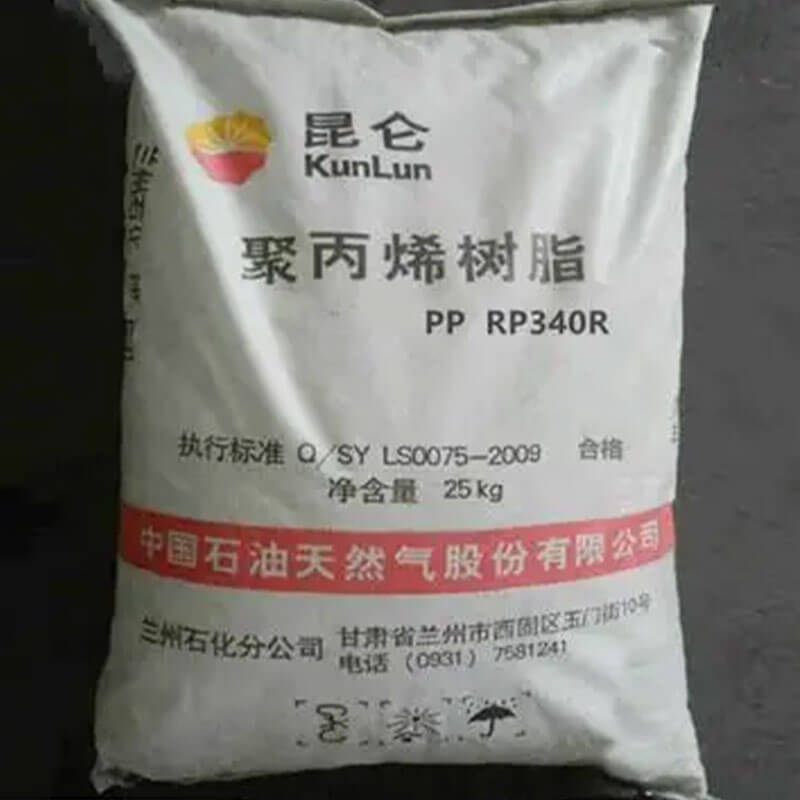
| Packing | Polypropylene RP340R is packaged in 25 kg multi-layer paper bags, palletized and shrink-wrapped for safe handling, transport, and storage. |
| Container Loading (20′ FCL) | Polypropylene RP340R in 25kg bags, loaded into 20′ FCL, stowed securely on pallets, protected from moisture and heat. |
| Shipping | Polypropylene RP340R ships as solid granules in sealed polyethylene-lined bags, octabins, or jumbo bags. It is non-hazardous under transport regulations. Keep containers dry, ventilated, and protected from heat, direct sunlight, and mechanical damage. Avoid excessive stacking during transit to prevent deformation and maintain material purity. |
| Storage | Store Polypropylene RP340R in a cool, dry, well-ventilated area away from direct sunlight, heat sources, and strong oxidizers. Keep original containers tightly sealed to prevent moisture pickup and contamination. Avoid prolonged exposure to UV light. Ensure storage area is clean and free of sharp objects to prevent bag damage. |
| Shelf Life | Shelf life is typically two years from manufacture when stored unopened in original packaging, away from heat, moisture, and sunlight. |
In high-cavitation tooling producing 125–500 ml dairy cups and deli containers, RP340R is normally run at a melt temperature of 230°C to 250°C and a mould temperature of 15°C to 30°C. The grade's nominal melt flow rate of 25 g/10 min when determined according to ISO 1133-1:2022 at 230°C/2.16 kg supports flow-length-to-wall-thickness ratios above 200:1, but high-speed filling above 250 mm/s introduces shear heating at the flow front. If the melt front exceeds 260°C, oxidative yellowing and vent plate-out become observable within 30–60 min of continuous cycling. Compliance for food-contact conversion is defined by Commission Regulation (EU) No 10/2011 with an overall migration limit of 10 mg/dm², and by FDA 21 CFR 177.1520 for olefin polymers under conditions of use A through H. Formulation on this grade is limited to 1–3 wt% of a polypropylene-carrier titanium dioxide masterbatch for usable opacity, 0.1–0.3 wt% of a sorbitol-based clarifier when haze below 8% is specified, and 0.25–1.0 wt% of a slip/antiblock masterbatch to control stacking friction. All additives are gravimetrically dosed at the feed throat; starve-feeding is avoided because batch-to-batch variation in dosing accuracy above ±0.05 wt% shifts the demoulding window. On a 250–350 t high-speed toggle clamp with a screw diameter of 50–70 mm and an L/D of 22:1, back pressure is held at 4–8 bar, screw rotation at 30–50 min¹, and decompression at 2–5 mm. Cycle output of 4–8 s is typical for 0.6–1.0 mm nominal wall, but hold pressure must drop to 30–45 MPa hydraulic after gate freeze to prevent core deflection and lip deformation. End-product types include single-serve yoghurt cups, dairy spread tubs, clear snack containers, and deli salad bowls with PE/EVA lidding film. Production-run failure modes include hinge whitening at the lip, post-mould sink at the base of side ribs, and colour drift when chillers deviate by more than 1°C across the mould face.
Beverage closure production on 64-cavity lines running 26/29 mm neck finishes imposes a narrower thermal window than thin-wall packaging because closure torque retention and organoleptic performance degrade before visual yellowing becomes obvious. Melt temperature is maintained at 235°C to 245°C, with hot runner drops no more than 5°C above nozzle setpoint, and the mould is cooled to 10°C to 18°C. Food-contact compliance for closures is anchored to FDA 21 CFR 177.1520 and EU No 10/2011; migration testing under the EN 1186 series with 10% ethanol and 3% acetic acid simulants is applied to the finished closure as assembled, while carbonation retention is validated against brand-specific pressure-drop protocols rather than a single ISO moulding specification. The formulation addition ratio typically comprises 1–2 wt% colour masterbatch, 0.05–0.15 wt% erucamide slip additive, and 0.1–0.3 wt% process stabilizer masterbatch; total additive loading is held below 2.5 wt% because higher levels produce sustained removal-torque reduction after 72 h storage at 40°C. Conversion uses valve-gated hot runner systems with gate diameters of 0.5–0.8 mm, injection fill times of 0.08–0.15 s, and holding pressure of 40–55 MPa for 0.5–1.2 s before cooling. The dominant process failure is inconsistent gate vestige formation on the sealing face, which allows odour ingress through the sealing area and is corrected by adjusting decompression to 3–6 mm and balancing hot runner tip temperatures within ±2°C. End products include tamper-evident water closures, aseptic juice closures, and non-carbonated dairy closures. The grade is not recommended for linerless carbonated soft drink closures above 3.5 volumes CO&sub2; unless a separate EVA or SEBS liner is used.
When converters add post-consumer recycled PP to RP340R for stackable storage boxes, the injection pressure at 230°C rises by 8–15% relative to virgin RP340R because the recycled fraction broadens the molecular weight distribution and destabilises the flow front. The formulation is set at 20–30 wt% post-consumer rPP with a melt flow rate of 10–30 g/10 min according to ISO 1133-1:2022, plus 0.1–0.3 wt% thermal stabilizer masterbatch and 0.05–0.2 wt% antioxidant masterbatch. For food-contact storage boxes, compliance requires that the recycled fraction be assessed under Regulation (EU) 2022/1616 when the article is sold in the EU; the virgin material can be referenced to EU No 10/2011 and FDA 21 CFR 177.1520, but the recyclate itself requires a food-contact substance notification or a no-objection letter in the US market. Moulding uses conventional injection machines of 80–300 t clamp force with a melt temperature of 215°C to 240°C, mould temperature of 15°C to 30°C, back pressure of 8–15 bar, and injection speed restricted to 40–80 mm/s to reduce flow marks from the recycled fraction. The clearest operational boundary is optical: haze rises from 6–8% for virgin RP340R to 15–25% at 30 wt% rPP, so the recycled blend is not used for high-clarity articles but is accepted for tinted or frosted storage containers. End products include stackable storage crates, closet organisers, under-bed boxes, and opaque food storage containers. The blend is not suitable for microwaveable trays because the post-consumer fraction may contain unidentified heat-history degradation products.
In cosmetic jar and compact base moulding, RP340R is selected for low odour and low volatile organic compound contribution, which matters because the packaging is evaluated for substance transfer under Article 17 of Regulation (EC) No 1223/2009 even though the article itself is not a cosmetic product. General compliance for the plastic component rests on REACH Regulation (EC) No 1907/2006 for SVHC content below 0.1% w/w, EU No 10/2011 overall migration as a conservative surrogate for cosmetic contact, and FDA 21 CFR 177.1520 when the same packaging family is exported for food supplements. Formulation addition is normally limited to 0.8–1.5 wt% pearlescent or inorganic pigment masterbatch, 0.1–0.3 wt% clarifier for transparent jars, and 0.1–0.3 wt% antioxidant masterbatch. The moulding process for thick-walled cosmetic components uses a melt temperature of 220°C to 240°C, a fill speed of 30–60 mm/s to prevent jetting and air entrapment, a holding pressure of 50–70 MPa hydraulic for 4–8 s, and cooling time indexed to 2–3 s/mm of nominal wall thickness. Tools are cold-runner single- or multi-cavity with polished SPI A-2/A-3 surfaces; hot runners are avoided when the base gate vestige is visible on the product. End-product types include cream jar bases, lip balm containers, compact powder cases, and airless pump collars. This grade is not recommended for cosmetic packaging that will be hot-filled above 80°C, because wall deflection and haze growth can exceed design limits for high-clarity jars.
When a processor switches a 100–500 ml personal care bottle application from a 12 g/10 min random copolymer to RP340R, the higher melt flow rate allows a preform fill time reduction of 0.2–0.5 s but also lowers the upper reheat condition before the blow stage. The grade is processed on an injection blow moulding line with three stations: preform injection at a barrel temperature of 220°C to 240°C, a core rod temperature of 30°C to 60°C, and blow air pressure of 6–10 bar against a mould temperature of 15°C to 25°C. Compliance for these bottles is anchored to EU No 10/2011 for plastic food-contact materials, FDA 21 CFR 177.1520 for olefin polymers where the bottles are used for food supplement packaging, and REACH Annex XVII restrictions for substances of concern. Formulation addition is limited to 0.5–1.0 wt% colour masterbatch and 0.1–0.2 wt% antioxidant masterbatch; no slip additive is used because surface tack assists label adhesion and reduces label flagging on high-speed sleeves. The main process risk is non-uniform wall thickness at the bottle shoulder when the transfer from injection to blow is delayed by more than 1.5 s; operators therefore set transfer timing to 0.8–1.2 s and maintain preform surface temperature within ±2°C. End products include shampoo bottles, body wash bottles, cosmetic refill bottles, and travel-size personal care containers. The grade is not recommended for extrusion blow moulding of containers above 1 L, where the low melt strength at 230°C cannot maintain parison uniformity in continuous extrusion.
Competitive Polypropylene RP340R prices that fit your budget—flexible terms and customized quotes for every order.
For samples, pricing, or more information, please contact us at +8618136850665 or mail to sales4@ascent-chem.com.
We will respond to you as soon as possible.
Tel: +8618136850665
Email: sales4@ascent-chem.com
Flexible payment, competitive price, premium service - Inquire now!
Polypropylene RP340R is supplied as a nucleated random copolymer injection-molding grade with a nominal melt mass-flow rate of 25 g/10 min at 230°C/2.16 kg per ISO 1133-1:2022. The resin is formulated for thin-wall rigid packaging and transparent housewares, where high flow length-to-thickness ratios, low residual shrinkage anisotropy, and organoleptic neutrality are required on high-cavitation hot-runner tools. Published technical data place density at 0.90 g/cm³ per ISO 1183-1:2019 and flexural modulus at approximately 1,150 MPa per ISO 178:2019. Because the grade contains a clarifier/nucleating system, its optical performance is materially different from conventional random copolymers processed without nucleation; haze on 2 mm plaques is typically near 10% when measured by ASTM D1003-13. The combination of high melt flow and nucleation reduces solidification time in cooled tooling but narrows the latitude for melt-temperature override and residence-time accumulation.
| Property | Test method | Typical value |
|---|---|---|
| Melt mass-flow rate, 230°C/2.16 kg | ISO 1133-1:2022 | 25 g/10 min |
| Density | ISO 1183-1:2019 | 0.90 g/cm³ |
| Tensile stress at yield | ISO 527-2:2012 | 27 MPa |
| Tensile elongation at yield | ISO 527-2:2012 | 9% |
| Flexural modulus | ISO 178:2019 | 1,150 MPa |
| Notched Izod impact at 23°C | ISO 180:2019 | 5.5 kJ/m² |
| Vicat softening temperature A50 | ISO 306:2022 | 134°C |
| Heat deflection temperature, 0.45 MPa | ISO 75-2:2013 | 80°C |
| Haze, 2 mm plaque | ASTM D1003-13 | 10% |
The tabulated values are representative and not specification limits; lot-specific certificates of analysis should be consulted before tooling design, particularly for hot-fill or food-contact applications in which minor shifts in modulus or impact can alter dimensional performance.
In thin-wall molding of nucleated random copolymers, the limiting variable is usually the interaction between gate freeze time and solidification-induced orientation at melt fronts. At a melt temperature of 230°C and apparent shear rate of 1,000 s-1, capillary rheometry data for nucleated PP random copolymers with equivalent MFR indicate apparent viscosity in the range of 25–45 Pa·s; published data for this specific configuration is limited, so the value is an envelope rather than a grade-specific curve measured per ISO 11443:2021. This viscosity plateau permits filling of wall sections below 0.8 mm in multi-cavity hot-runner tools, but only if the flow front remains above the solidification temperature. If the mold is too cold, the frozen layer thickens rapidly and effective flow-channel width decreases, producing short shots, weld-line weakness, or excessive flow marks.
Mold temperatures for high-gloss thin-wall containers are typically held at 20–40°C, but dimensional control on deep-draw tubs may require an increase to 50°C to reduce post-mold shrinkage variation. Barrel melt temperatures are set between 230°C and 250°C; zones above 280°C are undesirable because the narrow residence-time window accelerates chain scission and the formation of visible yellowing in clear parts. Production-scale machines with hot-runner manifolds should limit total residence time below 5 min at standby. Accumulated residence beyond 10 min has been associated with an upward MFR shift exceeding 5% and inconsistent packing behavior on mold trials.
Thin-wall fill speeds require high injection velocity, typically 60–95% of machine maximum, with fill pressure limited by the nozzle and hot-runner pressure drop. Cavity pressure transducers installed near the end of flow should record peak cavity pressures of 30–50 MPa, while hydraulic pressures on toggle-clamp machines of 2,500–4,500 kN clamp force should not exceed the machine manufacturer’s maximum recommended tie-bar stress. On electric molding machines with closed-loop transfer, transfer position is normally trimmed so that 90–95% of the shot volume enters during injection velocity, leaving 5–10% for packing. This prevents gate blush and excessive orientation at the frozen layer.
Post-molding shrinkage of nucleated random copolymer parts measured after 48 h according to ISO 294-4:2018 is generally in the range of 1.0–1.4% parallel to flow and 1.2–1.6% perpendicular to flow; anisotropic differences above 0.4 percentage points usually indicate inadequate packing pressure or premature gate freeze. Packing pressure is held at 50–70 MPa until gate seal, with hold time verified by part-weight stability rather than nominal timer alone. Gate sizes for thin-wall tubs are usually 0.5–1.2 mm in depth, with land length not exceeding 1.5 mm. If gate freeze occurs before cavity pressure reaches 30 MPa, holding phase cannot compensate shrinkage, producing sinks and dimensional variability. Pressure trace analysis on high-cavitation tools has shown that part-weight standard deviation rises above 0.5% when cavity-pressure integral varies by more than 10%.
Food-contact conversion of RP340R is governed by the base-resin condition and the thermal history of the melt during compounding and molding. United States framework compliance is assessed under FDA 21 CFR 177.1520, while European Union compliance requires demonstration under EU Regulation 10/2011 with an overall migration limit of 10 mg/dm² using the prescribed simulants for the intended food type. Migration kinetics of low-molecular-weight oligomeric species in polymer matrices are not uniform across temperatures; therefore, hot-fill or retort-exposed applications require specific migration testing on the finished article, not merely reliance on the bulk polymer certification. Emptying, filling, and capping lines using RP340R for dairy tubs often require lid-fit force consistency; post-mold shrinkage must be below 1.5% to maintain seal integrity. Dimensional checks should reference ISO 294-3 conditioning or an equivalent customer-defined storage period.
Organoleptic neutrality in closures and thin-wall containers is commonly evaluated by sensory protocols such as DIN 10955; published data for this specific configuration is limited, so end-use validation is required when the resin is combined with masterbatch, antistatic additives, or process aids. High melt-flow grades contain a larger low-molecular-weight fraction than pipe-grade random copolymers, which can increase the risk of taint or odor transfer in fatty-food simulants above 60°C.
Compared with homopolymer polypropylene of equivalent MFR, RP340R displays lower flexural modulus due to comonomer disruption of crystalline order. A representative homopolymer of 25 g/10 min MFR may show flexural modulus near 1,500 MPa, while the random copolymer level is approximately 1,150 MPa; notch-sensitivity declines and optical clarity improves because the random comonomer reduces spherulite size. Surface gloss at 60° angle per ASTM D523-14 generally exceeds 80 gloss units for RP340R because the nucleation system creates fine crystalline texture; a non-nucleated homopolymer may be 70 or less under the same tool finish.
Impact copolymers differ primarily in the presence of a dispersed ethylene-propylene rubber phase. At equivalent MFR, an impact copolymer can show notched Izod impact values of 12 kJ/m² or higher, but haze on 2 mm plaques is typically above 60%, making the material opaque. RP340R is specified only where transparency and gloss are process-critical; it is not a substitute for impact copolymer in low-temperature toughness applications. The absence of a discrete rubber phase also gives RP340R more uniform melt-flow behavior through small gates, but reduces resistance to stress whitening under bending.
Low-MFR random copolymers used in extruded pressure pipe have melt flow rates in the 0.25–0.5 g/10 min range and correspondingly high melt strength. RP340R at 25 g/10 min is unsuitable for continuous extrusion of multi-layer pipe because sag and draw instability occur at conventional pipe die temperatures. Differences are therefore not merely optical; they govern the choice of process route.
| Property | RP340R | PP homopolymer | PP impact copolymer |
|---|---|---|---|
| Melt mass-flow rate | 25 g/10 min | 25 g/10 min | 25 g/10 min |
| Flexural modulus | 1,150 MPa | 1,500 MPa | 1,000 MPa |
| Notched Izod impact at 23°C | 5.5 kJ/m² | 3.0 kJ/m² | 12 kJ/m² |
| Haze on 2 mm plaque | 10% | 45% | 70% |
| Vicat softening temperature A50 | 134°C | 155°C | 150°C |
Polypropylene is not hygroscopic, but condensation on cold pellets transferred from outdoor silos or unheated warehouses into a warm molding hall creates surface moisture that can produce splay, weak weld lines, and inconsistent nozzle pressure. When relative humidity exceeds 60% and pellet temperature is 10°C or more below the molding room dew point, a desiccant dryer operating at 80°C for 2 h with a dew point at or below -20°C removes surface moisture before the throat. Drying is not a general requirement for RP340R; it is a conditional correction tied to ambient handling.
Melt-stream management requires avoiding hot-runner manifold setpoints above 260°C and barrel residence beyond 10 min. High-flow nucleated grades are sensitive to shear heating in compression zones; screw designs with L/D ratios of 20:1 to 24:1 and low-compression feed sections are preferred for clear parts. Incompatible color concentrates with high-viscosity homopolymer carriers produce visible flow streaks and gate blush; masterbatches should employ carrier resins with MFR between 10 and 40 g/10 min and be compounded on twin-screw extruders with L/D ratios of 32:1 to 44:1 to ensure high-shear dispersion.
Regrind addition up to 30% by weight is commonly used in non-food-visible packaging, provided that the regrind is generated from clean, ungassed parts and is not contaminated with paper or polyethylene strap. Multiple heat histories raise the melt flow rate and reduce notched Izod values; after three reprocessing cycles at 240°C, impact reductions above 20% have been observed in comparable nucleated random copolymers. Where organoleptic or migration limits govern, regrind fraction and origin must be controlled under the same food-contact quality system as virgin resin.