Acrylonitrile‑Butadiene Rubber N41E

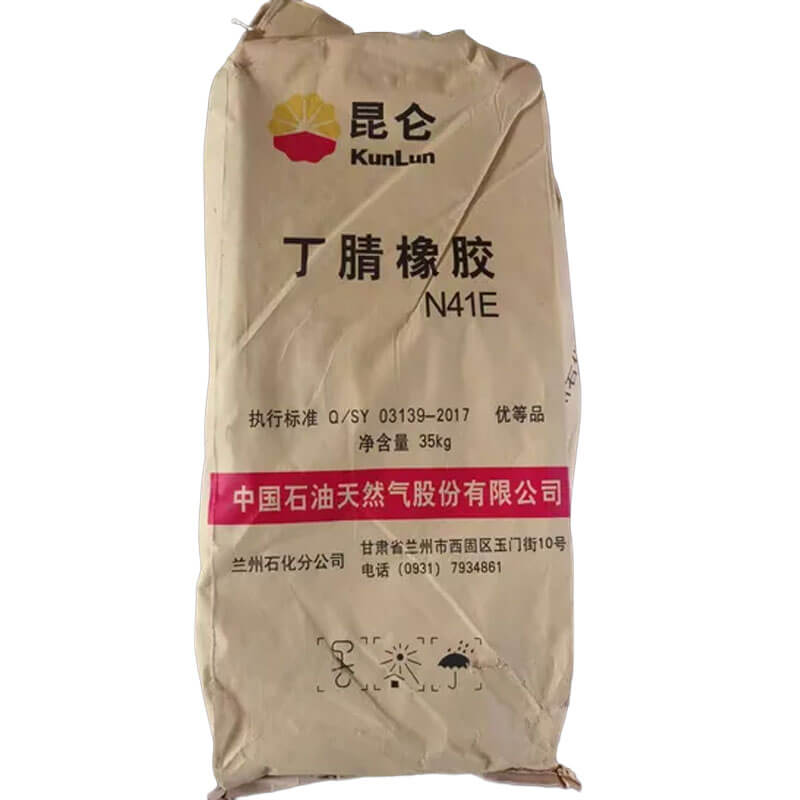
    • Product Name: Acrylonitrile‑Butadiene Rubber N41E
    • Factroy Site: No. 10 Yumen Street, Xigu District, Lanzhou City, Gansu Province
    • Price Inquiry: sales4@ascent-chem.com
    • Manufacturer: PetroChina Lanzhou Petrochemical Company
    • CONTACT NOW
    Specifications
    HS Code 792120
    Chemical Family Acrylonitrile-Butadiene Rubber (NBR)
    Cas Number 9003-18-3
    Acrylonitrile Content 41%
    Butadiene Content 59%
    Mooney Viscosity Ml 1 4 At 100 C 45 ± 5 MU
    Specific Gravity 1.00
    Volatile Matter ≤0.75%
    Ash Content ≤0.5%
    Stabilizer Non-staining antioxidant
    Appearance Light yellow to light amber solid bales
    Solubility Soluble in ketones and chlorinated hydrocarbons; insoluble in water and aliphatic hydrocarbons
    Glass Transition Temperature approximately -23°C
    Storage Stability Good when stored in a cool, dry, well-ventilated area

    As an accredited Acrylonitrile‑Butadiene Rubber N41E factory, we enforce strict quality protocols—every batch undergoes rigorous testing to ensure consistent efficacy and safety standards.

    Packing & Storage
    Packing Acrylonitrile-Butadiene Rubber N41E is supplied in 25 kg polyethylene-lined kraft bags, protecting against moisture and contamination.
    Container Loading (20′ FCL) This 20′ FCL loading for Acrylonitrile‑Butadiene Rubber N41E involves palletized cartons, properly secured, with protective lining against moisture and contamination.
    Shipping Acrylonitrile‑Butadiene Rubber N41E ships as solid bales or crumb in polyethylene-lined bags, cartons, or shrink-wrapped pallets. Keep dry, ventilated, and away from direct heat, sunlight, and ignition sources. Not regulated as dangerous goods under normal conditions, but protect packaging from damage during loading and transit.
    Storage Store Acrylonitrile-Butadiene Rubber N41E in a cool, dry, well-ventilated area away from direct sunlight, heat, and ignition sources. Keep containers tightly sealed to prevent contamination and moisture absorption. Avoid contact with strong oxidizing agents. Maintain stable temperatures; ideal storage below 25°C. Under these conditions, shelf life is typically up to two years.
    Shelf Life Shelf life for Acrylonitrile-Butadiene Rubber N41E is typically 5–10 years when stored cool, dry, and away from sunlight.
    Application of Acrylonitrile‑Butadiene Rubber N41E

    For fuel hose inner liners and fuel pump diaphragms, nitrile rubber with a nominal 41 wt% bound acrylonitrile delivers a practical balance between aliphatic fuel swelling resistance and retained flexibility after extraction. The polymer is classified as NBR under ISO 1629, and the 41 wt% acrylonitrile content places it among the medium-high oil-resistant grades used for aliphatic fuel contact. Compounds based on Acrylonitrile-Butadiene Rubber N41E are typically built with a carbon black N550/N774 dual filler system at total loading 95–105 phr and a sulphur donor cure system to limit free sulphur bloom in extruded profiles. Extrusion on a cold-feed pin-barrel extruder with L/D 16:1 and barrel temperatures controlled between 65 °C and 85 °C is standard practice; die swell at 40–60 °C head temperature must be compensated by draw-down ratio tuning. The finished liner is tested under ASTM D471 after 168 h immersion in Reference Fuel C at 40 °C, with acceptance limits commonly set at volume change +15% maximum and hardness change −10 to +5 Shore A. For fuel pump diaphragms, post-cure for 4 h at 150 °C is used to reduce compression set below 20% in ASTM D395 Method B, 22 h at 100 °C tests. The N41E grade permits calendering to 0.5–1.2 mm unsupported sheet with tear strength sufficient for die-cut gaskets in carburettor and low-pressure injection applications. Because nitrile rubber is not resistant to aromatic or oxygenated aggressive fuels above 30% aromatic content, component drawings should specify Reference Fuel C only for qualification, and field service with E10 gasoline requires immersion screening in ASTM Fuel C/E10 blends before release.

    What Limits N41E Use in Rotary Shaft Seal Lip Compounds?

    Rotary shaft seal lip compounds require a narrow dynamic hardening slope under ASTM D412 tensile testing and a low compression set after oil ageing because the seal lip flexes continuously at the shaft contact line. N41E can be used where continuous dry lip temperature remains below 100 °C; above this threshold, oxidative hardening consumes plasticizer and reduces lip followability, producing leakage at shaft speeds above 1 500 min−1 unless the compound is reformulated with trimethyl-quinoline antioxidant. A typical injection-moulded N41E lip compound includes 5–12 phr dioctyl sebacate or alkyl sulphonic phenyl ester plasticizer, 40–60 phr N330 carbon black, zinc oxide 5 phr, stearic acid 1 phr, and a semi-EV vulcanisation system with sulphur 0.5–1.2 phr and TMTD 1.5–2.5 phr. The compound is injection moulded with mould temperature 180–190 °C and cure time 90–150 s for a 2 mm cross-section; flashless tooling requires vent depth 0.015–0.025 mm because NBR vulcanizates show low viscosity at full plastication. Finished parts are tested under ASTM D412 for tensile strength ≥10 MPa and elongation at break ≥250%, under ASTM D2240 for hardness 70±5 Shore A, and under ASTM D471 after 168 h in IRM 903 oil at 120 °C for volume change +10% maximum and hardness change −5 to +10 Shore A. Seal lip contact surfaces are additionally checked for shaft wear under DIN 3760 or ISO 6194-1 test conditions, with hot air ageing at 70 h/100 °C requiring elongation loss ≤50% and no surface cracking. Because NBR is not suitable for contact with automatic transmission fluids containing aggressive extreme-pressure additives at sustained temperatures above 130 °C, N41E shaft seals are limited to mineral oil and engine oil service below the thermal oxidation ceiling of the nitrile backbone.

    In oilfield sealing stacks, N41E is usually selected as the base elastomer for packer elements, blowout preventer ram packers, and stripper rubbers where hydrogen sulphide partial pressure remains low and operating temperature remains below 120 °C. The compound design differs from automotive compounds by using high-structure carbon black N550 at 70–90 phr, a low-sulphur semi-EV cure system with sulphenamide accelerator, and a high-molecular-weight ester plasticizer 5–10 phr to limit extraction in hot crude oil. Large-section compression moulding must address the critical curing limitation: the nitrile compound has a low thermal conductivity of approximately 0.25 W/m·K, and thick sections above 20 mm require step curing at 140 °C to avoid internal porosity while maintaining a 90% cure state at the core. Preheat on a heated two-roll mill at 40–60 °C and press-loading at 0.5–1.0 MPa initial ram pressure reduce gas entrapment; the final moulding pressure is raised to 10–15 MPa after the rubber reaches mould temperature. Finished elements are qualified by hardness 85–95 Shore A under ASTM D2240, tensile strength ≥12 MPa under ASTM D412, tear strength ≥35 kN/m under ISO 34-1, and compression set ≤20% after 22 h/100 °C under ASTM D395 Method B. For gas service, rapid gas decompression resistance is evaluated according to NORSOK M-710 Annex B; N41E compounds with hardness above 90 Shore A and low plasticizer content generally show acceptable no-blowout performance at 5 MPa methane pressure but may fail at higher cyclic decompression rates because of low molecular mobility at the service temperature. The elastomer is not recommended for continuous exposure to high-aromatic crude, high-concentration hydrogen sulphide, or amine-based corrosion inhibitors that attack the nitrile crosslink network.

    When N41E Is Compression Moulded for LPG Cylinder Valve Seals

    Compression moulding of N41E for LPG cylinder valve seals is governed by EN 549:2019, which requires resistance to pentane and butane extraction, limited volume change after gas exposure, and low leakage across the sealing face. A production formulation for this application often contains N41E 100 phr, N330 carbon black 30–50 phr, precipitated silica 20–40 phr plus silane coupling agent 1.5–3 phr to reduce gas permeability, zinc oxide 5 phr, stearic acid 1 phr, and a low-free-sulphur cure system with tetramethylthiuram disulphide 1.0–2.0 phr and mercaptobenzothiazole disulphide 0.8–1.5 phr. The silica phase reduces the coefficient of permeability to propane by approximately 25–40% relative to an unfilled N41E control, but raises Mooney viscosity and requires a two-stage mixing cycle to prevent silane scorch. Parts are cured in multi-cavity compression moulds at 165–175 °C for 4–6 min at 2 mm equivalent thickness, with bumping after 60–90 s to vent trapped gas. Cryogenic deflashing at −80 °C is preferred to avoid edge tearing on sealing lips. Finished parts are tested under EN 549:2019 annexes for gas permeation and loss of mass, and under ISO 188 hot air ageing for 72 h/120 °C, with hardness change ≤+10 Shore A and elongation loss ≤50%. The terminal products include cylinder valve O-rings, regulator diaphragms, and tank coupling seals. The operational boundary is defined by the nitrile glass transition region near −20 °C for static seals; below this temperature, seal stiffening can permit leak paths during rapid gas expansion unless the compound is replaced with a low-ACN NBR or NBR/PVC grade.

    Downstream applicationQualification standard/codeTest conditionTypical N41E production acceptance window
    Fuel hose inner linerASTM D471Reference Fuel C, 168 h/40 °Cvolume change ≤+15%; hardness change −10 to +5 Shore A
    Rotary shaft sealISO 6194-1 / DIN 3760IRM 903 oil, 168 h/120 °Cvolume change ≤+10%; hardness 70±5 Shore A
    Oilfield packer elementNORSOK M-710 Annex B5 MPa methane decompressionno blowout; hardness 85–95 Shore A
    LPG cylinder valve sealEN 549:2019gas exposure and extraction annexesper EN 549:2019 class limits
    Industrial roll coverDIN ISO 4649abrasion, 10 Nvolume loss ≤150 mm³ at 75 Shore A
    Tank lining / expansion jointASTM D471 / ASTM D624diesel fuel, 168 h/23 °Cvolume change ≤+15%; tear ≥30 kN/m

    On a two-roll mill or in an internal mixer, N41E is often blended with phenolic novolac resin and high-structure carbon black to produce roll cover compounds for steel processing lines and printing dampening systems. A typical roll cover formulation uses N41E 100 phr, N330 carbon black 45–65 phr, silica 10–20 phr, phenolic tackifying resin 8–15 phr, dibutyl phthalate or alkyl benzyl phthalate 8–15 phr, zinc oxide 5 phr, and sulphur 1.0–2.0 phr with sulphenamide accelerator. The compound is calendered to 1–3 mm strips and wrapped on a sandblasted steel core with a primer system based on Chemlok or equivalent; the cover is wound under tension and wrapped with nylon tape to resist steam penetration during vulcanisation. Autoclave curing is performed in saturated steam at 140–150 °C for 6–10 h depending on cover thickness, and the finished roll is ground on a cylindrical grinder to a surface roughness of Ra 0.4–1.6 µm. Hardness is controlled from 60 Shore A to 95 Shore A by adjusting carbon black and plasticizer levels; abrasion resistance is measured under DIN ISO 4649, with typical volume loss below 150 mm³ for a 75 Shore A cover. The finished rolls are used as deflector rolls, squeegee rolls, printing press dampening rollers, and textile pad rolls where mineral oil or aliphatic solvent contact is intermittent. N41E covers are not resistant to fast-drying ketone or ester-based printing inks; those applications require a NBR/PVC blend or a carboxylated NBR with higher polarity. Additionally, continuous running temperatures above 100 °C can cause surface tack and hardening at the core interface due to heat build-up in thick covers, so internal water cooling is recommended when line speed exceeds 100 m/min.

    Calendered N41E Sheeting for Oil-Resistant Tank Linings and Expansion Joints

    Calendered N41E sheeting is used as an oil-resistant barrier layer in secondary containment liners, chemical sump linings, and pipe expansion joints where aromatic solvent concentration is low and intermittent hydrocarbon contact occurs. Sheet formulation includes N41E 100 phr, N774 carbon black 50–70 phr, talc or calcium carbonate 20–40 phr to reduce cost and permeability, antioxidant 6PPD 1–2 phr, zinc oxide 5 phr, and a sulphur donor cure system. The compound is mixed in an internal mixer with two-stage mixing to avoid scorch, then calendered to 1.5–4.0 mm thickness and cured in a continuous rotary cure unit or autoclave on fabric or metal carriers. Seams are prepared by buffing the cured sheet edges, applying a tie gum made from uncured N41E compound calendered to 0.5 mm, and splicing under pressure at 140–150 °C. For containment service, the liner is tested under ASTM D412 for tensile strength ≥10 MPa, under ASTM D624 die C for tear strength ≥30 kN/m, and under ASTM D471 for immersion in diesel fuel for 168 h/23 °C with volume change ≤+15%. Chemical resistance is limited to aliphatic hydrocarbons and mineral oils; contact with aromatic solvents such as toluene or xylene above 5% concentration leads to excessive swelling and must be excluded by specification. The liner is not recommended for concentrated acids, ketones, or esters, nor for continuous UV exposure unless compounded with carbon black at the stated loading and protected by a topcoat. Installation temperature must remain above 5 °C to prevent sheet cracking during unwinding and splicing.

    Free Quote

    Competitive Acrylonitrile‑Butadiene Rubber N41E prices that fit your budget—flexible terms and customized quotes for every order.

    For samples, pricing, or more information, please contact us at +8618136850665 or mail to sales4@ascent-chem.com.

    We will respond to you as soon as possible.

    Tel: +8618136850665

    Email: sales4@ascent-chem.com

    Inquiry

    Get Free Quote of PetroChina Lanzhou Petrochemical Company

    Flexible payment, competitive price, premium service - Inquire now!

    Certification & Compliance
    More Introduction

    Acrylonitrile-butadiene rubber N41E is supplied as a cold-polymerized medium-high nitrile elastomer with a target bound acrylonitrile content of 41 mass %. The grade is classified as an NBR under ASTM D1418 and as NBR 41 under ISO 1629. Raw polymer quality is assessed by ISO 24698-1:2018 for bound acrylonitrile, ISO 289-1:2018 for Mooney viscosity, and ISO 247-1:2021 for ash. Typical supplier technical documentation reports Mooney viscosity ML(1+4) 100 °C of 50 MU and specific gravity of 0.97. The stabilizer system is non-staining, which permits light-coloured compounds when colour stability is controlled by ASTM D1148-19. Compared with hot-polymerized NBR, the cold emulsion process used for N41E yields a more linear polymer backbone and lower gel content, which translates into reduced nerve and lower die swell during processing.

    Typical raw polymer characteristics reported for N41E
    PropertyTypical valueTest method
    Bound acrylonitrile content41 mass %ISO 24698-1:2018
    Mooney viscosity50 MU (ML(1+4) 100 °C)ASTM D1646-19a / ISO 289-1:2018
    Specific gravity0.97ISO 2781:2018 / ASTM D297
    Volatile matter<0.75 %ISO 248-1:2021
    Ash<0.5 %ISO 247-1:2021

    Why Does Bound Acrylonitrile Content Govern Oil Resistance and Low-Temperature Performance?

    The target bound acrylonitrile content of 41 mass % places N41E in the medium-high nitrile band. This composition controls two opposing properties. Oil and non-polar solvent resistance increases with acrylonitrile content because the polar nitrile groups reduce segmental mobility and increase the solubility parameter distance from aliphatic hydrocarbons. A compound based on N41E immersed per ASTM D471-16a in IRM 901 oil for 70 h at 100 °C will exhibit lower volume swell than a 33 mass % ACN grade tested under identical conditions. Conversely, the 33 mass % grade will have a lower glass transition temperature and better low-temperature compliance when assessed by temperature-retraction testing per ASTM D1329-16 or brittleness point per ISO 812:2017. For a 41 mass % ACN NBR, the glass transition temperature measured by differential scanning calorimetry per ISO 11357-2:2020 is typically in the range -22 °C to -18 °C. The exact swell and low-temperature values are formulation-dependent and must be generated on the cured compound; published data for this specific configuration is limited when plasticizer type, filler loading, and cure state are not fully specified.

    Mixing of N41E in production-scale internal mixers differs from high-Mooney NBR grades primarily in filler incorporation and heat history. A typical upside-down mixing sequence for a 55 phr N330 carbon black formulation uses a 45 L intermeshing rotor internal mixer with a 0.75 fill factor, rotor speed 40–50 min⁻¹, and discharge temperature below 120 °C. Because the raw polymer Mooney viscosity is 50 MU, the compound reaches a stable ram position after carbon black addition without requiring excessive peptizer. On open mills, ASTM D3182-07(2019) rolls set at 40 °C to 60 °C are appropriate; the bank should be maintained tight to minimize entrapped air. Field data from single-screw extruders with 20:1 L/D indicate that screw speeds above 60 min⁻¹ can generate frictional heat exceeding 110 °C in the metering section when measured by a melt thermocouple at the die entry. The scorch safety of N41E is measured by ISO 289-2:2020; a typical Mooney scorch time for a sulfur-modified compound is above 20 min at 125 °C, but the value is strongly influenced by accelerator type and sulfur content.

    When N41E Is Substituted for High-Gel 41% ACN Grades in Extrusion and Molding

    Substitution of N41E for a high-gel 41 mass % ACN grade changes die swell and surface appearance. N41E is low-gel relative to general-purpose 41% acrylonitrile grades, which reduces die swell in profile extrusion and improves dimensional stability in a Garvey die extrusion test conducted per ASTM D2230-17. The effect is more apparent at low shear rates; at high shear rates the influence of filler and plasticizer becomes dominant. In injection molding, flow length in a spiral mold may be greater than a comparable high-gel grade at the same compound hardness, but the exact gain depends on gate and runner geometry. On a 1200 kN injection molding machine with a 200 cm³ shot size, a 70 Shore A N41E compound typically requires clamp force of 0.6 kN/cm² to 0.8 kN/cm² of projected area when barrel temperatures are maintained at 60 °C feed, 70 °C rear, 80 °C middle, and 90 °C nozzle. A barrel temperature window of ±5 °C around the middle-zone set point is often used to avoid scorch and rough surface. If the mold is not vented, low-gel NBR can trap air and produce flow lines; vacuum-assisted venting or a brief breathing cycle is required. Published data for this specific configuration is limited because mold-filling behaviour is compound-dependent.

    In cure system selection, vulcanization kinetics of N41E are comparable to other cold-polymerized 41 mass % ACN NBR grades. Efficient vulcanization systems with low free sulfur, such as 0.5 phr sulfur plus 2.5 phr MBTS and 0.5 phr DPG, generate a high monosulfidic crosslink density and are preferred for compression set resistance at 125 °C per ASTM D395-18 Method B. Conventional sulfur curing at 1.5–2.0 phr sulfur gives higher initial tensile and tear strength per ISO 37:2017 and ISO 34-1:2015, but the polysulfidic network is less resistant to heat aging. Peroxide curing with dicumyl peroxide at 2.0–3.0 phr is an alternative for improved heat resistance up to 150 °C; however, peroxide cures can be retarded by amine-based antioxidants and certain sulfur donor accelerators. The product must be evaluated in the intended cure system by moving-die rheometer per ISO 6502-2:2018 to obtain minimum and maximum torque, ts2, and t90 for the production batch. Migration kinetics in polymer matrices also affect plasticizer selection for fuel-contact applications; monomeric adipate and sebacate plasticizers migrate more rapidly than polymeric counterparts when exposed to IRM 903 oil or Reference Fuel B under ASTM D471-16a conditions.

    Storage Conditions and Regulatory Boundaries Are Set by the Raw Polymer Form

    Raw N41E is stabilized with a non-staining antioxidant and is supplied in bales or crumb form according to the vendor. Storage in a dry area below 30 °C and away from direct sunlight is required to prevent oxidation of the polybutadiene segments. The polymer should be consumed within 36 months from the date of manufacture when stored in original, undamaged packaging. If relative humidity exceeds 60 %, condensation on cold bales can introduce moisture into the compound, which can cause porosity in vulcanizates; pre-drying at 50 °C for 1–2 h in an air-circulating oven may be required before mixing. Avoid storage adjacent to volatile amines because amine contamination can alter cure kinetics even at low concentrations. Regulatory completeness must be confirmed for the final article, not the raw polymer alone. A raw polymer declaration may indicate that N41E does not contain substances listed on the REACH Candidate List above the threshold of 0.1 mass %, but Regulation (EC) No 1907/2006 compliance of the supplied product is a supplier-issued document. RoHS compliance under Directive 2011/65/EU is also compound-dependent because fillers, pigments, and stabilizers added downstream may alter the restricted-substance inventory.

    Regulatory documents relevant to N41E raw polymer and final compounds
    RequirementScopeTypical control limit
    REACH SVHC declarationRaw polymer<0.1 mass % per listed substance
    RoHS Directive 2011/65/EUFinished articleCadmium 100 mg/kg; lead, mercury, hexavalent chromium, PBB, PBDE each 1000 mg/kg
    Food-contact rubber suitabilityFinished article onlyEvaluate under FDA 21 CFR 177.2600 or regional equivalent after migration testing
    ISO 14001 manufacturing siteSupplier processCertificate validity and scope to be confirmed with supplier

    In oil seal and gasket applications, N41E is compounded to 70–80 Shore A hardness per ASTM D2240-15. The cured seal must meet oil aging requirements per ASTM D471-16a, with limits for volume swell, tensile change, and elongation change agreed between the molder and end user. A rotary shaft seal made from N41E can be expected to show lower swell in IRM 902 oil than a 33 mass % ACN NBR compound but higher swell than a 50 mass % ACN compound under the same temperature and time. For O-rings, compression set per ASTM D395-18 Method B at 125 °C for 70 h is a critical requirement; sulfur donor systems are usually necessary to remain below 25 % set. The limiting application temperature for continuous dry heat exposure is generally below 100 °C for sulfur-cured N41E and up to 120–130 °C for peroxide-cured compounds; above that, alternative polymers such as HNBR or FKM are required. Hydraulic hose tube compounds based on N41E are evaluated for resistance to mineral oils and for low-temperature flexibility per ISO 812:2017 or equivalent low-temperature impact tests. Industrial roll covers using N41E are typically blended to 60–70 Shore A and ground after vulcanization; hardness is verified per ASTM D2240-15, and surface roughness is measured with a profilometer per ISO 21920-2:2021.

    Differences from Other 41% ACN NBR Grades and Alternative Elastomers

    Relative to generic 41 mass % ACN NBR grades, the principal difference of N41E is the controlled gel content and reduced processing nerve. High-gel grades often have higher green strength but may produce rough extrudate surfaces at high screw speed; N41E is designed for low die swell and smoother extrudate in continuous vulcanization lines. Compared with a 50 mass % ACN NBR, N41E has better low-temperature compression set and less tendency to stiffen at -30 °C, but lower resistance to aromatic fuels and polar solvents. Compared with 33 mass % ACN NBR, N41E provides better oil and fuel resistance with a moderate low-temperature penalty. The selection of N41E over polychloroprene is typically driven by the combination of mineral oil resistance and mechanical strength; however, N41E has poorer ozone resistance than polychloroprene unless para-phenylenediamine antiozonants or waxes are added and tested per ASTM D1149-18. For hot air resistance, N41E is outperformed by HNBR and FKM; the replacement decision is based on continuous service temperature and fluid exposure rather than ambient-temperature tensile properties alone.